New Banks Bill Targets Online Pornography with Age Verification Rules

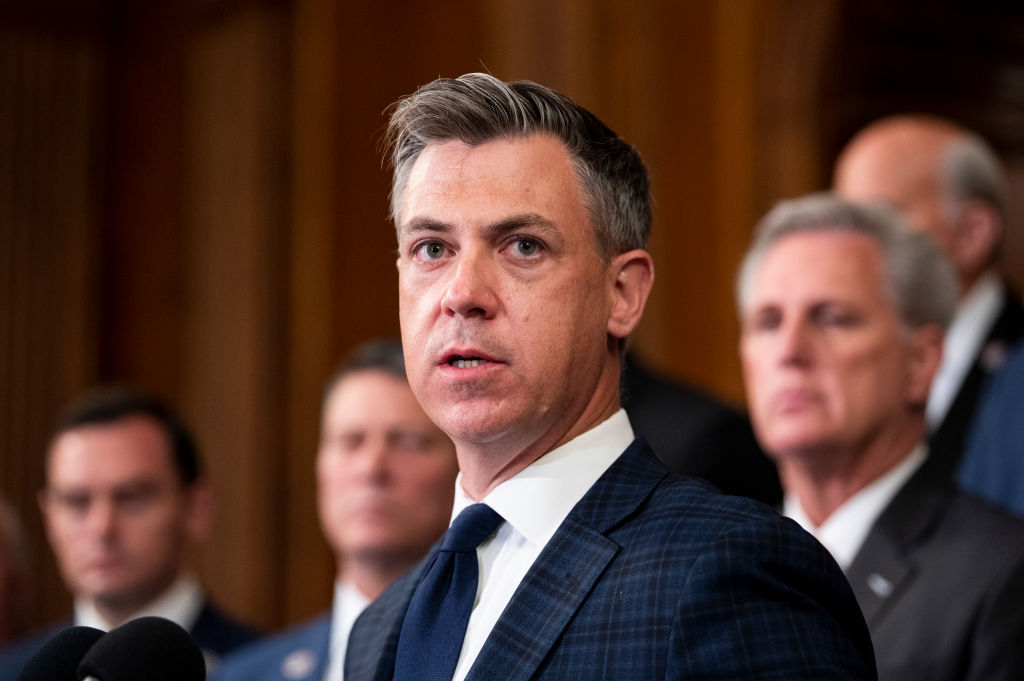
WASHINGTON, D.C. — In an effort to curb minors’ access to sexually explicit material online, Indiana Senator Jim Banks introduced federal legislation aimed at holding commercial pornography websites legally accountable.
The bill, titled the Safety and Age Filtering Enforcement (SAFE) for Kids Act, establishes strict age-verification protocols for digital platforms, pushing back against what proponents describe as a growing crisis of youth exposure to adult content.
“Kids should not be exposed to pornography with just a few clicks,” Senator Banks said in a statement. “The SAFE for Kids Act helps parents protect their children and bring commonsense safeguards nationwide.”
The SAFE for Kids Act focuses heavily on commercial entities that profit from explicit material. Under the proposed law, any commercial website where more than one-third of the content is deemed sexual and harmful to minors must deploy robust age-verification systems.
To ensure compliance, the bill establishes a multi-layered enforcement mechanism:
Federal Trade Commission (FTC) Oversight: Grants enforcement authority to the FTC under consumer protection laws.
Department of Justice (DOJ) Action: Authorizes federal prosecutors to investigate and penalize platforms that knowingly violate the restrictions.
Private Right of Action: Empowers parents and legal guardians to file civil lawsuits directly against non-compliant adult entertainment platforms.
The bill arrives during a wave of state-level age-verification laws. More than 25 states have already enacted similar requirements. The legal framework for these mandates was recently strengthened by the U.S. Supreme Court in Free Speech Coalition v. Paxton, where the Court recognized the government’s compelling interest in shielding minors from online pornography.
A wide array of family and conservative advocacy groups have thrown their weight behind Banks’ bill, including Heritage Action, the American Principles Project, and the Institute for Family Studies.
“Congress must act now to protect our children from adult content on the internet. No more excuses,” said Dr. Kevin Roberts, President of Heritage Action. Roberts argued that while Washington has historically moved slowly on digital safety, children are being exposed to “vile, pornographic images” without meaningful guardrails. He noted that the legislation finally gives parents the legal tools necessary to hold companies liable.
According to data cited by supporters of the bill, the average child encounters online pornography for the first time around age 12, with roughly 60 percent of those exposures occurring completely by accident.
New Banks Bill Targets Online Pornography with Age Verification Rules was originally published on wibc.com





