Why your body cannot naturally heal infections inside a tooth
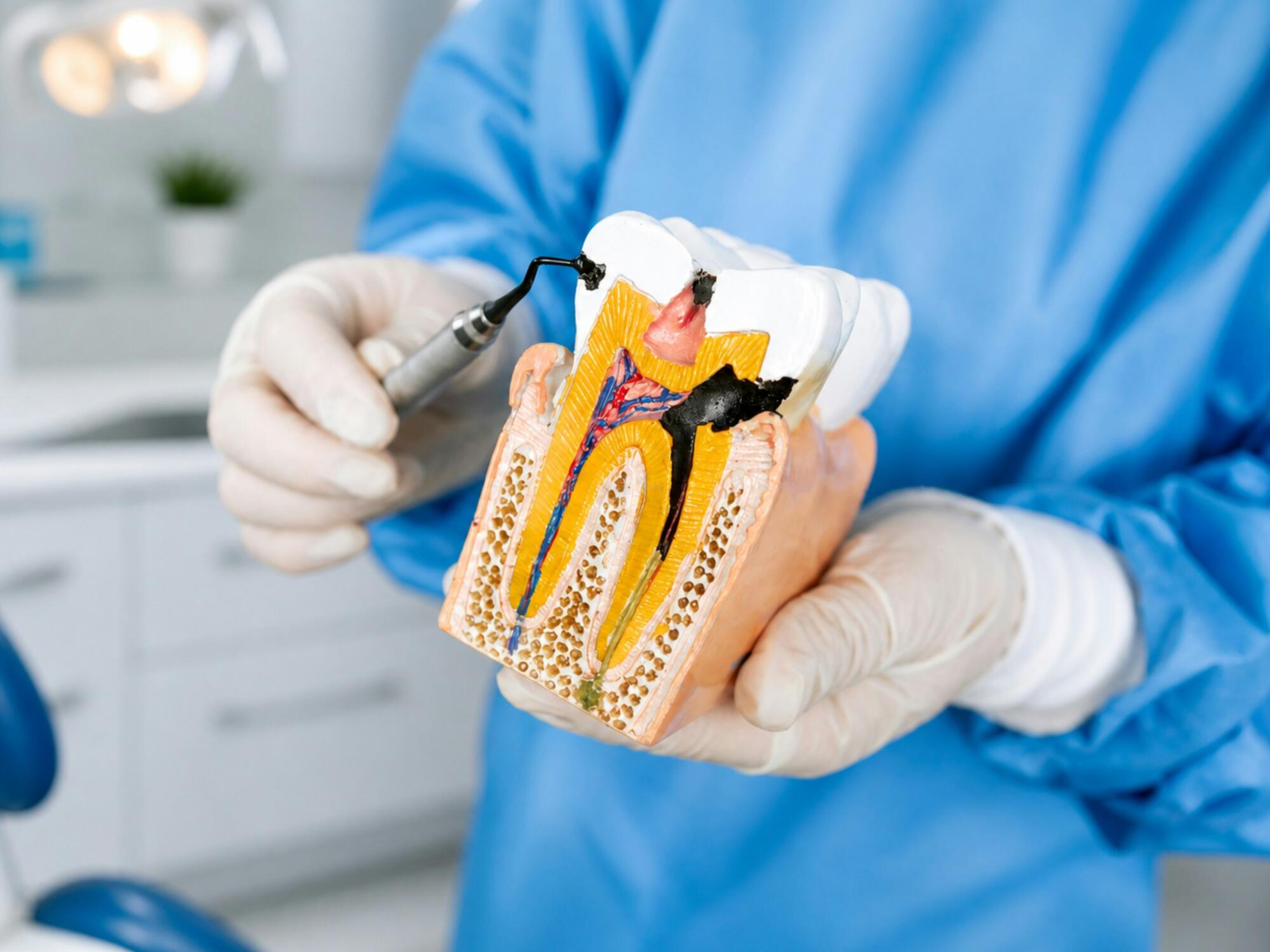
Your body cannot naturally heal infections inside a tooth because the tooth’s sealed anatomy physically blocks immune cells from reaching the infected pulp. When bacteria destroy the blood vessels inside, white blood cells and antibiotics have no pathway to follow.
According to the National Institute of Dental and Craniofacial Research, more than 15 million root canals are performed in the United States each year. A small crack or untreated cavity is all it takes for bacteria to reach the pulp.
Why Can’t Your Immune System Heal Infections?
A tooth infection takes hold when bacteria reach the pulp, the soft inner tissue containing nerves and blood vessels. Your immune system typically relies on blood flow to deliver white blood cells to infected areas.
Hard enamel and dentin seal the pulp inside, so blood flow cannot reach it once bacteria take over. When bacteria destroy the blood vessels inside, your body actually loses its only route to the infection.
Immune cells need a working blood supply to travel, and that supply collapses fast.
What Happens to Bacteria Once They’re Inside the Pulp?
Inside the pulp, bacteria feed on damaged nerve tissue and blood vessels and multiply fast. In fact, immune cells cannot reach the sealed pulp in large enough numbers to slow the spread.
People often assume the bacteria will stop spreading on their own, but that rarely happens. The sealed environment helps bacteria thrive, and without treatment, the infection worsens.
The Danger of a Disappearing Toothache
Tooth infection symptoms can change over time in ways that seem like improvement. One of the most misleading signs is pain that seemingly stops. This happens when nerve tissue dies from bacterial damage.
Here are some tooth infection symptoms that usually appear before the pain disappears:
- Persistent throbbing pain that tends to worsen at night
- Swelling in the gum, jaw, or cheek near the affected tooth
- Sensitivity to heat or cold that lingers after the source goes away
- A small bump on the gum that may release fluid
- Fever or a general sense of feeling unwell
Is There Any Way to Treat It Without a Dentist?
Many people reach for home remedies for infection first, including saltwater rinses, clove oil, or over-the-counter pain relief. These options reduce discomfort temporarily, yet they fail to remove bacteria from inside the pulp.
Dental infection treatments require physical access to the infected tissue. Patients can now find an endodontist in Niles, IL, whom locals trust for specialist care.
Here are the main treatment options a dentist or endodontist provides:
- Tooth extraction removes the entire tooth when damage is too severe to treat otherwise
- Antibiotics prescribed alongside treatment help clear bacteria that have spread beyond the tooth
- Root canal therapy usually takes one to two appointments and saves your natural tooth
Take Action Before a Tooth Infection Becomes an Emergency
A tooth infection sits beyond the reach of your immune system, protected inside a sealed chamber that blood flow cannot penetrate. Waiting for it to resolve on its own leads to predictable complications. Your body cannot heal infections inside teeth because bacteria are walled off from your defenses, and professional treatment is the only way to address that.



Visit our website for a deeper look at root canal therapy, extraction, and when to see a specialist.





